I have spent the past few months tinkering with experimentation and lomography as the two really do equal one. If I can create imperfection/creativity within either the camera / lens or in the film development process, I feel I have achieved my goals.
But does Lomography imply ‘flying by the seat of your pants’? … Not even close. First there are two main types of cameras that Lomography works with. One is your basic Holga or Lomo or cameras such as the Olympus XA series. In those cameras you shoot with ‘auto’ and set you focus by zone. That’s it.
The others are cameras where the photographer has more control over shutter, aperature and even ISO as you can push or pull or purposely shoot low light film in high lighted areas or vise-versa. In either of those two cases you still approach your shots with an unpredicatable and untraditional style. IE: Just snap without focus or speed, or shoot into the sun, or perhaps view obstructions as a positive. On and On……
Take for instance this photo below:
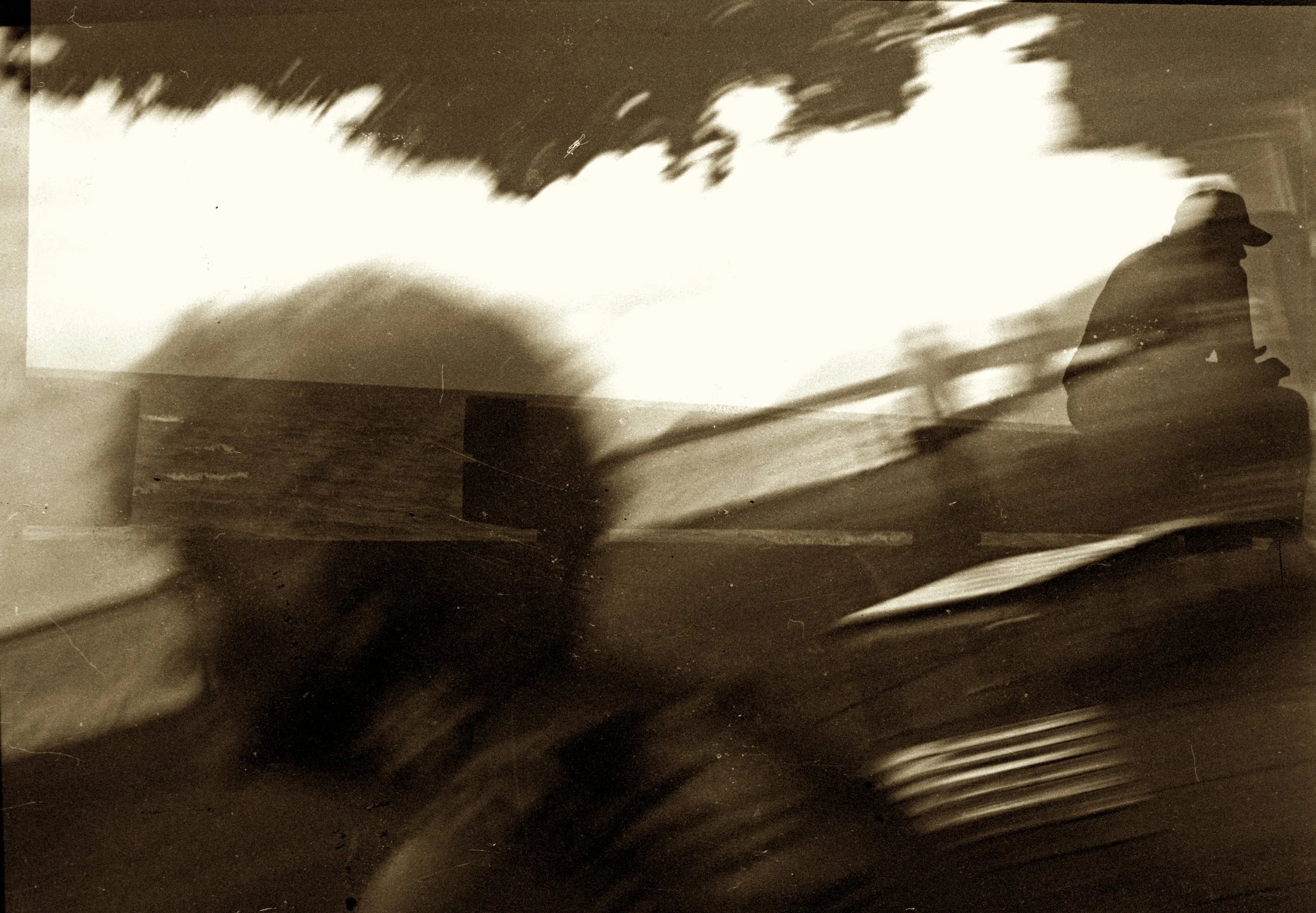
Can you say “Lomographic”? This was shot with no concern for focus. It was composed of negatives that were shot in the evening hours with a low 100 ISO. But more importantly it was shot with an ‘eye’ for composition, and that is something that is not easily taught. Try to teach a person to think creatively, just try.
Or look at the next shot”
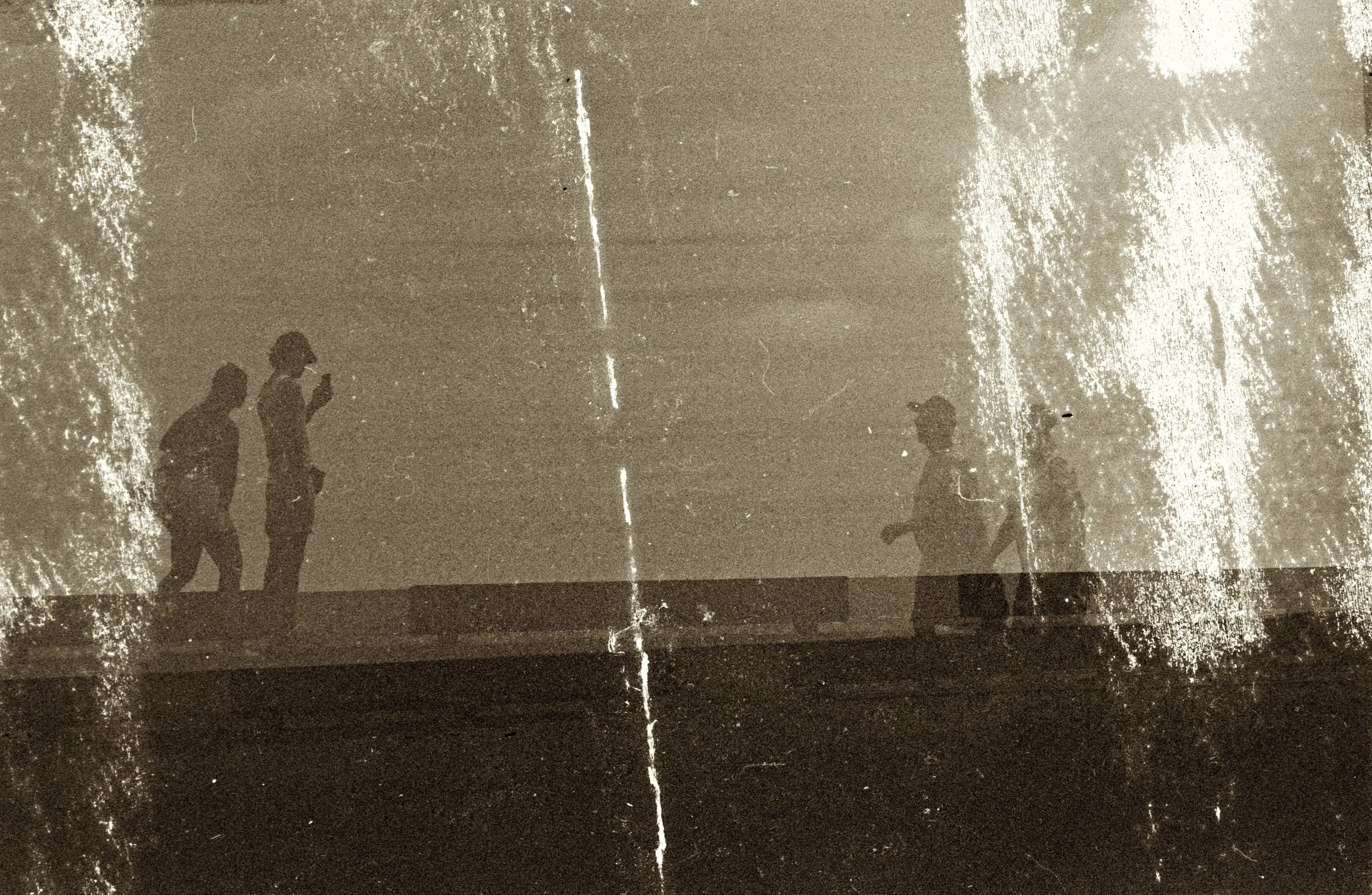
Most people would view this as a throw-away but not me. I view this imperfection as perfection. Just look at the stray light etched in. Now when taking this shot, I didn’t know I would obtain this degree of light but because I knew where I was in the roll of film, I could guess what might come of it. So framing the shot and using composition simular to each, let alone exposure….gave me ‘this’ as a final product. I happen to love it. It just looks cool.
Or this shot….
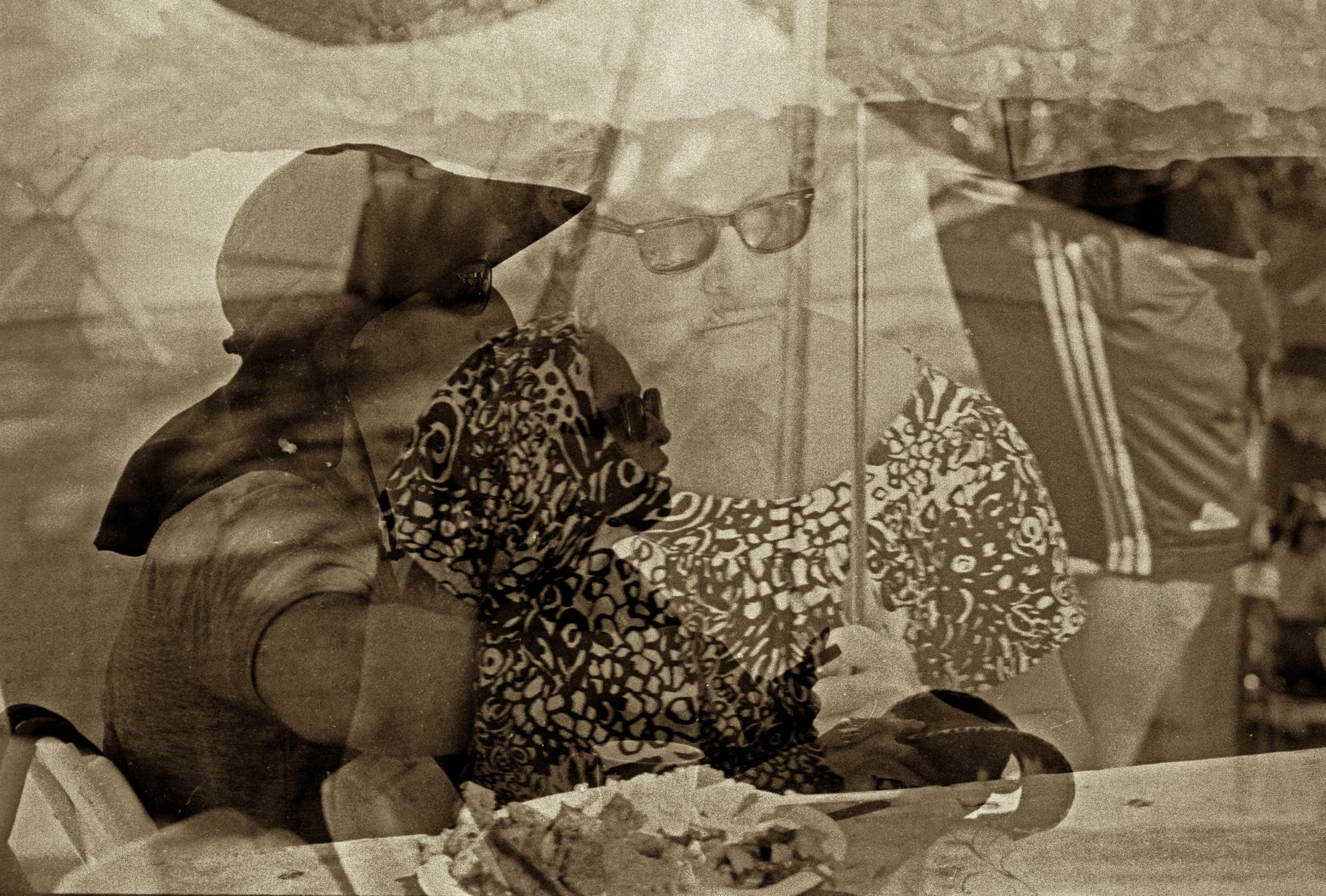
Again, it just works and it has an awesome appearance. The main characters are grouped in the middle …but activity floats 360. Faces appear to just be staring off. Emotion or boredom or an “I don’t care attitude’ …. The three figures are melded together and crop out of the other. A nice blend but notice here, unlike the other two, that there is more clarity and definition found in the faces. So lomography is unpredicatable ….it involves clarity where it might work, and messiness when needed or ambiguity to focus on. So my experimentation continues as I have a gallery of ‘puzzle-type photography in mind. I just need to keep being creative.
